
SERVICES
Routine Exams in Pleasanton
What Happens During a Routine Exam
A routine exam is one of the simplest things you can do for your teeth. It’s quick. It catches trouble early. And it saves a lot of headaches later.
During a routine exam, we check every tooth, your gums, your bite, and the soft tissue inside your mouth. We look for cavities, early gum disease, grinding, and anything else that looks off. Most visits take about 30 minutes. You sit down, we take a close look, and we talk through what we find.
Here’s what a routine exam covers in our office:
- Visual check of every tooth and existing dental work
- Gum tissue evaluation for inflammation or recession
- Bite and jaw assessment
- Oral cancer screening of your tongue, cheeks, and throat
We get a lot of calls for routine exams, especially from families settling into Pleasanton near Mohr Elementary or over by the Stoneridge shopping corridor. New town, new dentist. That’s usually how it starts. And with Pleasanton traffic, people want visits that stay on schedule (we get that).
Most adults need a routine exam twice a year. If you’ve had gum issues or it’s been a while, we may suggest coming in sooner. No judgment. Just a place to start.
A routine exam is where every good treatment plan starts. If you want to know more about what happens at your first visit, our full routine exams page walks through the process step by step.
Digital X-Rays
X-rays show us what we can’t see with our eyes alone. Decay between teeth. Bone loss under the gumline. A cracked root that looks fine on the surface. Digital X-rays catch all of it, and they do it fast.
Our digital system uses a fraction of the radiation older film X-rays needed. The images show up on screen in seconds. We can zoom in, adjust contrast, and show you exactly what we’re looking at. No waiting. No guessing.
For most patients, we take a full set of X-rays once a year. If you’ve had recent X-rays at another office, bring them along. We can work from those. Patients coming in from Birdland or the newer developments near Ironwood Drive often transfers records from a previous dentist, and that’s fine.
Bitewing X-rays are the ones we use most during a routine visit. They show the upper and lower back teeth and help us spot decay between molars before it turns into a bigger problem. Panoramic X-rays give us a wider view of your jaw and help with wisdom teeth or bone structure.
Digital X-rays are part of preventive care. They help us stay ahead of problems instead of chasing them.

Teeth Cleaning
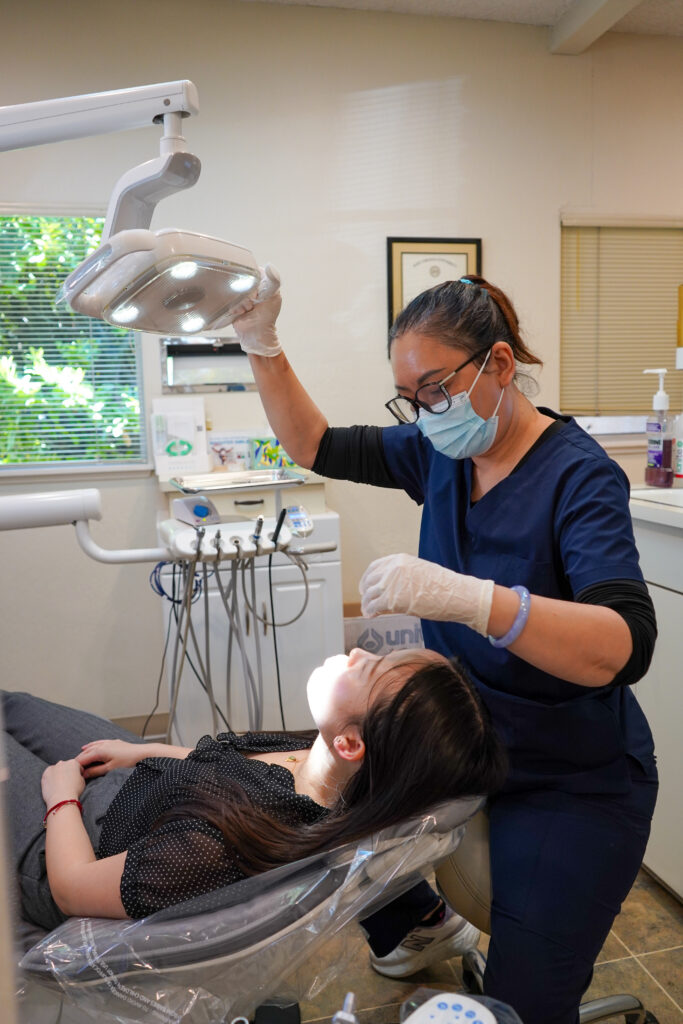
Brushing and flossing at home do a lot. They don’t do everything. Tartar builds up in spots that are hard to reach, and once it hardens, only a professional cleaning gets it off.
During a cleaning, our hygienist uses hand tools and an ultrasonic scaler to clear away buildup above and just below the gumline. Then we polish your teeth to remove surface stains. The whole visit usually takes 30 to 45 minutes, depending on how much buildup there is.
Cleanings feel different for different people. Some patients are fine the whole time. Others are more sensitive, especially around the gumline. Let us know if anything bothers you. We can slow down or take a break.
We see a lot of patients from Vintage Hills who come in every six months like clockwork. That habit matters. Less buildup makes the cleaning easier, and your gums stay in better shape over time. And by the way, the post-cleaning feel is nice, but the real value is what happens under the gumline.
A cleaning isn’t just about fresh breath or that smooth feeling. It’s about removing the bacteria that cause gum disease. Gum disease is the leading cause of tooth loss in adults. A cleaning twice a year is one of the simplest ways to stay ahead of it.
Gum Disease Screening
Most people don’t know they have gum disease until it’s already moved forward. Early gum disease, called gingivitis, usually doesn’t hurt. Your gums might bleed a little when you brush. They might look puffy. Easy to miss. Harder to fix once it gets worse.
We screen for gum disease at every routine exam. We measure the pockets around each tooth with a small probe. Healthy pockets measure 1 to 3 millimeters. Deeper pockets tell us gum tissue has started pulling away from the tooth. Bacteria get in there fast.
Catching gum disease early matters. Gingivitis can be reversed with a good cleaning and better home care. The more advanced stage, periodontitis, needs deeper treatment and ongoing management. We’d rather catch it at gingivitis.
Patients near downtown Pleasanton and Kottinger Ranch often come in after noticing bleeding gums for the first time. That’s a smart move. Bleeding gums are your body flagging a problem. Don’t wait for it to settle down on its own.
If we find signs of gum disease, we’ll talk through your options clearly. No pressure. Just the facts so you can make a good call.

Oral Cancer Screening
Oral cancer is serious. It’s also much easier to treat when caught early. The problem is that most people don’t get screened on a regular basis, so it often goes unnoticed until it’s already advanced.
We include an oral cancer screening at every routine exam. It takes about two minutes. We check your lips, tongue, the floor of your mouth, the roof of your mouth, your cheeks, and your throat. We’re looking for sores, patches, lumps, or anything that looks out of place.
You don’t need symptoms to benefit from a screening. That’s the point. Most early oral cancer doesn’t hurt. It doesn’t look dramatic. It just looks a little different from normal tissue. That’s what we’re trained to spot.
Risk factors include tobacco use, heavy alcohol use, and HPV. Oral cancer also shows up in people with none of those risk factors. Age matters too. We see patients from Pleasanton Ridge and Laguna Oaks who’ve never smoked a day in their life and still benefit from yearly screenings.
If we find something that needs a closer look, we’ll send you to the right specialist fast. Early detection changes the outcome. This two-minute check is worth it every time.

Your Questions Answered
Frequently Asked Questions
How often should I come in for a routine exam?
Twice a year works for most people. If you have a history of gum disease, cavities, or other ongoing issues, we may recommend coming in every three to four months instead. We’ll tell you what makes sense after your first visit.
What if I haven't been to the dentist in a few years?
It happens. Come in anyway. We’ll do an exam, take X-rays, and figure out where things stand. No lecture. We just want to get you back on track and make a plan that fits your life.
Do routine exams hurt?
The exam itself doesn’t hurt. The cleaning can feel uncomfortable if there’s a lot of buildup or if your gums are sensitive. Tell us if something bothers you. We can slow down, adjust our technique, or talk about numbing if needed.
Can I bring my kids to the same appointment?
Yes. We see patients of all ages. If you want to schedule your kids at the same time as your own appointment, let us know when you call. We’ll do our best to line up the timing so you’re not making extra trips.
What should I bring to my first appointment?
Bring your insurance card if you have one, a list of any medications you take, and any recent dental X-rays from a previous dentist. If you don’t have X-rays, that’s fine. We’ll take new ones here.
Is an oral cancer screening really necessary if I feel fine?
Yes. Early oral cancer usually has no symptoms. That’s why the screening matters. It takes two minutes and it’s included in your routine exam. There’s no reason to skip it.
Contact Us
Join Our Growing Dental Family
Whether you are looking for a routine cleaning or a full smile makeover, we invite you to experience the difference that compassionate, comprehensive care makes.

Phone

Location
1400 Santa Rita Road, Suite L, Pleasanton, CA 94566