
SERVICES
Dental Hygienist in Pleasanton
DENTAL HYGIENE
What a Dental Hygiene Appointment Actually Covers
Most people think it’s just a quick polish and you’re out the door. That’s maybe 10% of what actually happens.
When you sit down in our chair here in Pleasanton, your dental hygienist is doing a full assessment of your mouth before any cleaning tools come out. We’re checking your gums, looking at each tooth, reviewing your medical history updates, and comparing everything to your last visit. That comparison matters more than most people realize. Small changes over six months can catch problems early, things you’d never feel or see on your own.
Here’s what your first visit covers:
01
The Assessment Phase
02
The Cleaning Itself
03
The Education
The Assessment Phase
Your appointment starts with a conversation. We ask about any sensitivity, bleeding when you brush, or changes in medications. Then the hygienist measures your gum pockets with a small probe. Those numbers tell us a lot. Healthy gums measure between one and three millimeters. Anything above that and we’re watching closely for early gum disease.
Someone comes in feeling fine, no pain at all, and their pocket depths have jumped from three to five in a couple of spots. That’s not an emergency. But it’s a clear signal that something needs to change before it becomes one.
If it’s time for digital x-rays, those happen during this phase too. They let us see what’s going on below the gumline and between teeth: cavities hiding between molars, bone loss that hasn’t shown symptoms yet, and even changes around old fillings. According to the American Dental Association, dental x-rays can detect decay and bone issues that a visual exam alone would miss.

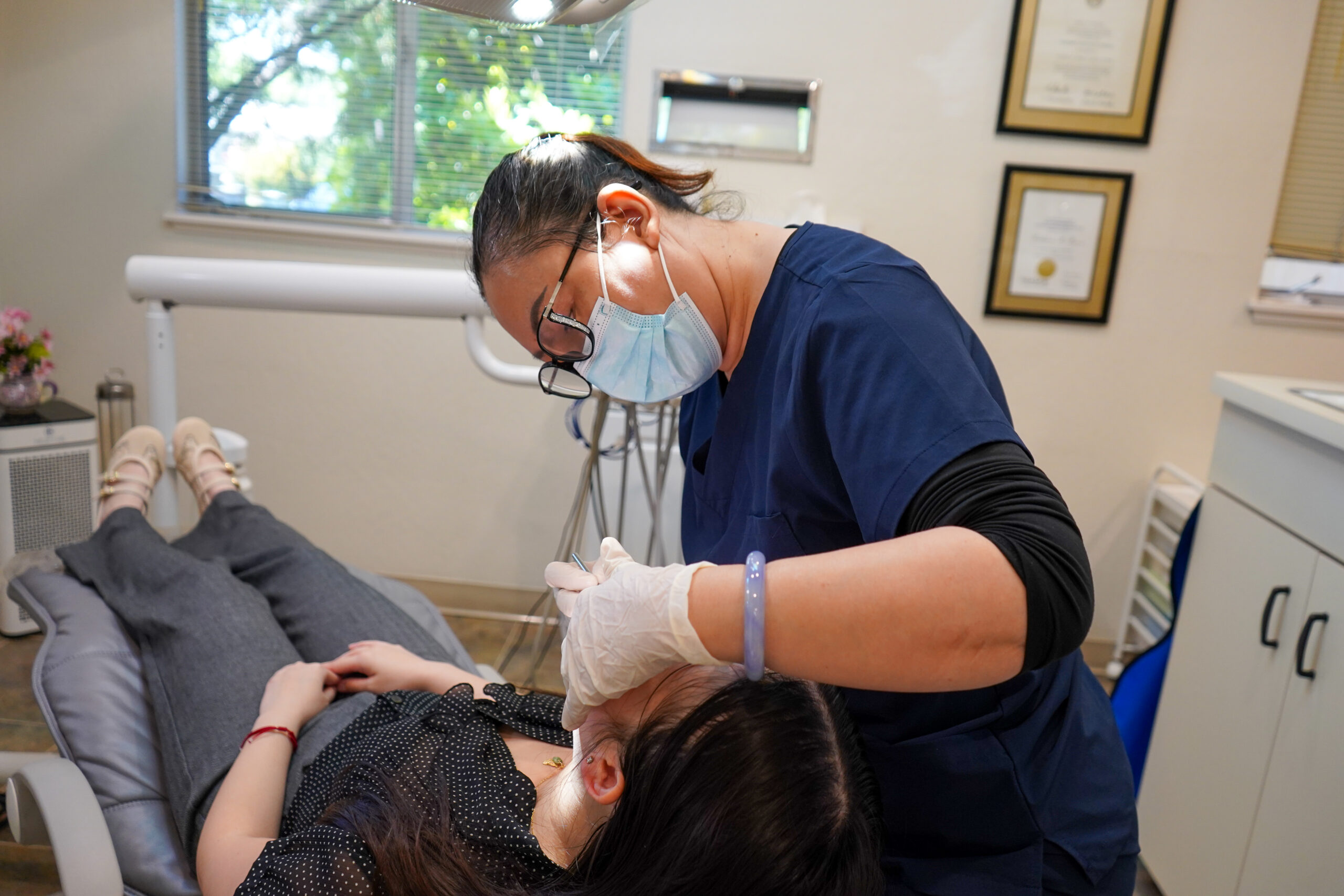
The Cleaning Itself
Here’s what the actual cleaning process looks like step by step:
- Your hygienist uses a scaler to remove tartar buildup above and below the gumline. This is the part that sometimes feels like scraping. Tartar can’t be removed by brushing at home, no matter how good your technique is.
- Next comes the polishing paste on a slow-speed handpiece. It smooths the tooth surfaces and removes surface stains from coffee, tea, or red wine.
- Then we floss every contact point between your teeth. We’re checking for spots that catch or bleed, which tells us where you might need to focus more at home.
- A fluoride treatment goes on if it’s part of your care plan. It sits on your teeth for a few minutes and helps strengthen enamel against decay.
- Finally, the hygienist does an oral cancer screening. We check your tongue, cheeks, roof of your mouth, throat, and neck for anything unusual.
That oral cancer screening takes about two minutes. Most patients don’t even realize it’s happening. But it’s one of the most important parts of the visit.
What Makes Each Visit Different
Not every appointment is identical. Someone living near the Pleasanton Ridge who drinks well water might have different staining patterns than someone in the Hacienda area on city water. A patient on blood pressure medication might have drier gums that need extra attention. We adjust.
Nine times out of ten, the heaviest buildup is behind the lower front teeth and on the cheek side of the upper molars. Those spots are right next to your salivary glands. More saliva means more mineral deposits; it’s just how your mouth works.
And if we find areas where tartar has pushed below the gumline deeper than normal, we might recommend scaling and root planing instead of a standard cleaning. That’s a deeper clean done in sections, sometimes with numbing. We don’t jump to that unless the numbers support it.

The Education Part Nobody Expects
Here’s something that surprises people. A big chunk of your hygiene appointment is patient education. Your hygienist will show you exactly where you’re missing when you brush. We’ll point out the spots where plaque keeps building up. Maybe your technique is great on the left side but you’re rushing the right.
Ever notice bleeding when you floss and just figured that’s normal? It’s not. That’s your gums telling you something. Your hygienist will talk through what’s causing it and how to fix it at home.
We also talk about habits. Grinding at night, chewing ice, and using your teeth to open packages. These things show up in wear patterns, and your hygienist spots them fast. If grinding is an issue, that connects to our TMJ/TMD evaluation services too.
By the time you leave, you should know exactly what’s going on in your mouth. Not just “everything looks good.” You deserve specifics. Our licensed hygienists in Pleasanton take the time to give them to you because a cleaning without context is just maintenance. A cleaning with real conversation behind it is prevention.
Want to know where you stand? Give us a call and we’ll get you on the schedule.

How Pleasanton's Lifestyle Affects Your Oral Health Between Visits
You’d be surprised how much your daily routine shapes what we find during your dental hygienist appointment.
Pleasanton is an active city and it comes with habits that quietly affect your teeth and gums between visits.
What Active Lifestyles Do to Your Teeth
Let’s start with something simple. Water. Or more accurately, not enough of it. When you’re hiking in the Tri-Valley heat or pushing through a workout, your mouth dries out fast. Dry mouth isn’t just uncomfortable. It lets bacteria multiply quickly because saliva isn’t there to wash things away. We notice more plaque buildup in patients who exercise a lot but don’t hydrate well during the day.
Then there’s what you drink instead of water. Sports drinks, iced coffees with flavored syrups, and smoothie bowls from downtown spots. These are loaded with sugar and acid. According to the American Dental Association, acidic beverages soften enamel and make teeth more vulnerable to decay. That damage happens slowly, so you won’t feel it until your dental hygienist points out early signs of erosion during a cleaning.
Here are the most common habits we see causing trouble between visits:
- Sipping on coffee or tea throughout the morning without rinsing afterward
- Using sports drinks instead of plain water
- Snacking on dried fruit, granola bars, or trail mix that sticks in grooves and between teeth
- Chewing ice from cold drinks on warm afternoons
- Brushing too hard right after eating acidic foods, which actually scrubs away softened enamel
When someone comes in with more tartar than expected, one of these habits is the reason. Not bad hygiene. Just small choices that add up.


Stress, Clenching, and What We Find in Your Mouth
Pleasanton has a lot of busy professionals. That kind of schedule creates stress, and stress shows up in your mouth before you ever feel pain.
Clenching and grinding are common here. People do it in their sleep without knowing. They do it in traffic on 680. They do it sitting at a desk staring at a screen. Your dental hygienist can spot the signs during a routine visit: flat spots on your back teeth, gum recession along certain areas, and soreness in your jaw that you thought was just tension. These are clues that grinding is wearing down your enamel and pushing your gums back.
And here’s the thing most people don’t connect to. When you clench, you create tiny cracks in enamel that trap bacteria. So even if you brush and floss perfectly, those micro-fractures become hiding spots for plaque. That’s why some patients feel frustrated. They’re doing everything right at home but still getting cavities or gum inflammation. The grinding is the missing piece.
Kids and Families Face Different Challenges
Families in the Birdland neighborhood or over near Vintage Hills deal with a different set of issues. Kids’ oral health between visits depends heavily on what happens at school lunch and after practice. Juice boxes, fruit snacks, and gummy vitamins are some of the worst offenders for sticky sugar that sits on teeth for hours.
Ever notice your child’s breath smelling off even though they brushed that morning? That’s usually buildup along the gumline or between teeth where a toothbrush can’t reach well. Kids under ten rarely floss effectively on their own, so by the time they sit in our chair, there’s often early gingivitis brewing that a parent wouldn’t catch at home.
We also see a lot of mouth breathing in younger patients. Allergies are common in the Tri-Valley, and kids who breathe through their mouths dry out their gum tissue. Dry gums get irritated faster and bleed more easily during cleanings. It’s not a sign of disease. It’s a sign their body is working against their oral health between visits.
Want to know where things stand before your next appointment? Give us a call and we’ll get you on the schedule.
What happens between your dental hygienist visits matters just as much as what happens during them. Small adjustments to hydration, snacking, and nighttime habits can change what we find at your next cleaning. You don’t need a perfect routine. You just need to know which habits are quietly causing problems so you can make a few easy swaps. That’s part of what we do during every visit in Pleasanton. We don’t just clean your teeth. We help you understand what’s going on so the next six months go better than the last.
Your Questions Answered
Frequently Asked Questions
What should I expect during my first dental hygienist appointment in Pleasanton?
Your first visit starts with a full-mouth assessment before any cleaning begins. We check your gum pocket depths, review your medical history, and take x-rays if needed. Then we remove tartar, polish your teeth, floss every contact point, and finish with an oral cancer screening. Most patients are surprised by how thorough it is. You’ll leave knowing exactly what’s going on in your mouth, not just a vague “everything looks fine.”
How does Pleasanton's active lifestyle affect what my hygienist finds at my appointment?
Pleasanton residents who hike, run trails, or stay busy with sports often show more plaque buildup from dehydration. When your mouth dries out, bacteria multiply faster because saliva isn’t washing things away. Sports drinks and flavored coffees also soften enamel over time. Your hygienist adjusts the cleaning and gives you specific tips based on your daily habits, not just a generic routine.
How often should I see a dental hygienist for cleanings?
Most people do well with a cleaning every six months. But if your gum pocket depths are higher than three millimeters, or if you have a history of gum disease, your hygienist may recommend every three to four months. The right schedule depends on what your mouth is actually doing, not a one-size-fits-all rule. We look at your numbers and your habits together before making that call.
Is bleeding gums during cleaning something I should be worried about?
Bleeding gums during your appointment is a signal, not something to ignore. It usually means gum inflammation is present, often from plaque buildup along the gumline. Your hygienist will show you exactly where it’s happening and why. In many cases, improving your home routine and keeping up with regular cleanings reduces or stops the bleeding over time. It’s not normal, but it is fixable.
What are scaling and root planing, and how are they different from a regular cleaning?
Scaling and root planing is a deeper cleaning done when tartar has built up below the gumline in pockets deeper than normal. Unlike a standard cleaning, it’s done in sections and sometimes with numbing. Your hygienist only recommends it when your pocket depth numbers support it. It’s not a scary procedure, but it does take more time and a follow-up visit to check how your gums are healing.
Can I book a dental hygienist appointment in Pleasanton if I haven't been seen in a few years?
Yes, and you’re not alone. Many patients come back after a long gap between visits. Your hygienist will do a full assessment first to understand where things stand. There may be more buildup to remove, and we might take updated x-rays. We don’t judge the gap. We just focus on getting your mouth back on track and building a plan that works for you going forward.
Contact Us
Join Our Growing Dental Family
Whether you are looking for a routine cleaning or a full smile makeover, we invite you to experience the difference that compassionate, comprehensive care makes.

Phone

Location
1400 Santa Rita Road, Suite L, Pleasanton, CA 94566