
SERVICES
Dental Bridges in Pleasanton
What a Dental Bridge Does for a Missing Tooth
A missing tooth changes more than your smile. It changes how you chew, how you talk, and how the rest of your teeth line up over time.
We see this in our Pleasanton office almost every week. Someone comes in thinking a gap is just cosmetic. But the neighboring teeth have already started shifting. Their bite feels off. Food gets stuck in new places. What started as one missing tooth now affects three or four.
A dental bridge fills that gap by anchoring a replacement tooth to the healthy teeth on each side. Those anchor teeth get fitted with dental crowns, and the false tooth sits between them. It looks natural, feels solid, and keeps everything in place. According to the American Dental Association, a well-made bridge can last many years with proper care.
What Happens When You Wait Too Long
Here’s what most people don’t realize. Your teeth want to move. When there’s an open space, the neighboring teeth drift toward it. The tooth above or below the gap can start to drop down or push up. This creates bite problems that are harder to fix later. We’ve had patients from the Bernal neighborhood come in after waiting two or three years, and by then they need more work than just a bridge.
So what does a dental bridge actually solve? Here’s the short list:
- Restores your ability to chew normally on both sides
- Keeps surrounding teeth from shifting out of position
- Supports your jaw structure where the tooth was lost
- Brings back a natural look so you’re not hiding your smile
And it does all of this without surgery. That’s a big deal for people who aren’t ready for dental implant placement or who want a faster solution. A dental bridge gets you back to normal in just a couple of visits, not months of healing.
The patients we talk to wish they’d done it sooner. The relief on their face when they can bite into an apple again is real.
How to Know If You Are a Good Candidate
Most people who walk into our Pleasanton office asking about dental bridges are good candidates. That’s the honest truth.
But “most” isn’t “all.” A few things need to line up before we can move forward. The biggest one is the health of your anchor teeth, the ones on each side of your gap. They need to be strong enough to handle the extra load. If they’re cracked, heavily decayed, or loose from gum disease, we need to address that first. Sometimes a different path makes more sense.
Here’s what we look at during your evaluation:
- The condition of your neighboring teeth and whether they can support crowns
- Your gum health, especially any signs of periodontal disease
- The amount of bone remaining where the tooth was lost
- Your bite alignment and how your upper and lower teeth meet
- Any habits like grinding or clenching that could stress the bridge
We see patients near the Bernal area who’ve been missing a tooth for years and just assumed nothing could be done. We can still help. Bone loss does happen over time, but it doesn’t always rule out a bridge the way it might rule out other options.
You might be wondering about your overall health. Conditions like diabetes or autoimmune disorders don’t automatically disqualify you. They just mean we plan more carefully. Same goes for smokers. We’ll talk through the risks so you can decide what’s right.
One thing that surprises people is age. Dental bridges work well for adults in their 30s and adults in their 80s. There’s no upper limit if your mouth is healthy enough.
Not sure where you stand? That’s the most common reason people call us. A new patient consultation takes the guesswork out of it. We’ll do a complete exam, take digital X-rays, and give you a clear answer. No pressure, just information you can use. And if a bridge isn’t the right fit, we’ll tell you that too.
The Two-Appointment Bridge Process Explained
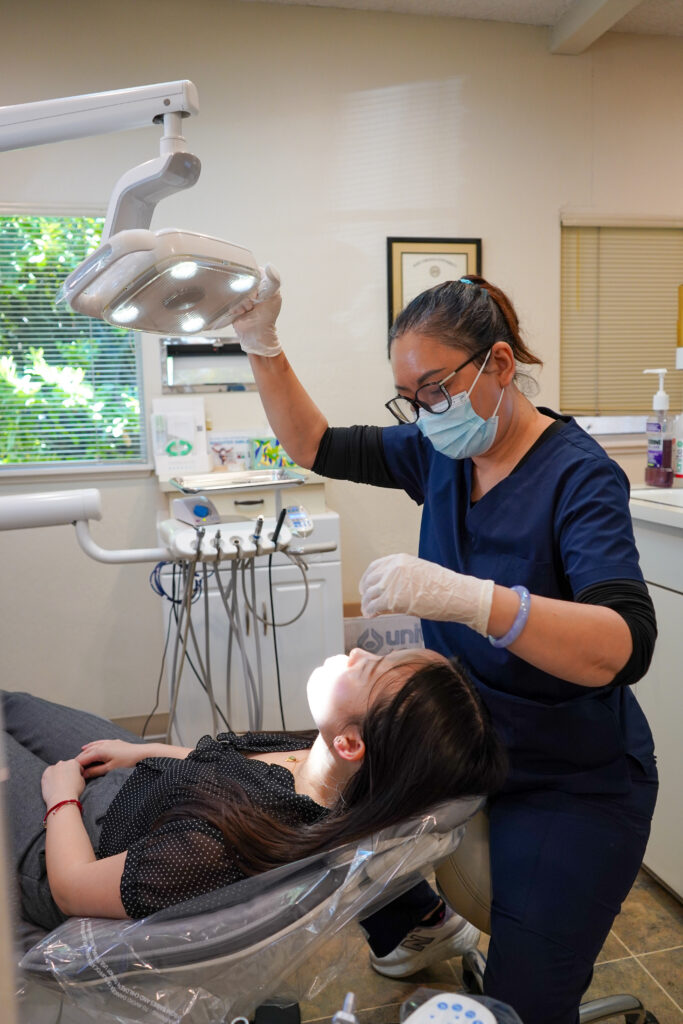
Two visits. That’s all it takes to close the gap in your smile. We’ve placed hundreds of dental bridges right here in Pleasanton, and the process is straightforward once you know what to expect.
Here’s exactly how your two appointments break down:
- First appointment: preparation. We numb the area and reshape your abutment teeth, the anchors that hold everything together. We remove a thin layer of enamel so the crowns can fit over them naturally. Then we take a digital impression of your bite and send it to the lab. Before you leave, we place a temporary bridge so you’re never walking around with an open space.
- Second appointment: placement. Usually about two weeks later. The lab sends back your permanent bridge, and we check the fit, the bite, the color. We make small adjustments right in the chair if needed. Once everything looks right and feels right, we cement it in place. Done.
The whole first visit runs about an hour. Sometimes a little longer if we’re working on a bridge that spans more than one missing tooth. The second visit is usually quicker, maybe 30 to 45 minutes.
Between appointments, that temporary bridge does real work. It protects your prepared teeth and keeps everything from shifting. We tell every patient the same thing: don’t pull sticky candy with it, don’t floss aggressively around it. Just be gentle for those two weeks.
The permanent bridge fits perfectly on the first try most of the time. But occasionally we’ll send it back for a minor tweak. That’s not a problem. We’d rather get the fit exactly right than rush it. Patients from the Bernal neighborhood and all across Pleasanton appreciate that we don’t cut corners on this step. It matters for how long your bridge lasts.
Want to get started? Give us a call and we’ll walk you through everything at your first visit.

Abutment Preparation: What Patients Actually Want to Know
This is the part that makes people nervous. We get it.
Abutment preparation is how we get your anchor teeth ready to support a dental bridge. Those neighboring teeth need to be reshaped so the bridge fits snugly over them, feels natural, and holds up for years. Patients tell us this step sounded way worse than it actually was.
Here’s what happens during abutment preparation at our Pleasanton office:
- We numb the area completely. You won’t feel the reshaping work.
- A thin layer of enamel gets removed from each anchor tooth. This creates room for the crown portion of the bridge to sit over them.
- We take a digital impression of the prepared teeth and the gap. That impression goes to the lab.
- A temporary bridge gets placed so you leave looking and feeling normal.
The whole visit usually runs about an hour. Sometimes a little longer if we’re working on a back molar area where access is tighter. But you’re comfortable the entire time, and we offer nitrous oxide if you want extra relaxation.
People always ask, “Does removing enamel damage my healthy teeth?” Fair question. The amount we remove is minimal. Think of it like reshaping a nail before applying a protective cover. Those teeth end up shielded by the bridge crowns, which helps protect them from future decay in many cases. According to the American Dental Association, a well-fitted dental bridge can function effectively for ten years or more with proper care.
One thing we see regularly with folks near the Bernal neighborhood who come in for a consultation, they’re surprised how little soreness follows this appointment. Most people manage fine with over-the-counter pain relief for a day or two. Some don’t need anything at all.
And that temporary bridge? It works well enough that coworkers won’t notice a thing. You can eat carefully, smile normally, go about your week. The permanent bridge comes back from the lab in about two weeks, then we bring you in for the final fitting.
Keeping Your Bridge Clean and Making It Last
Here’s what we tell every patient who sits in our chair after getting a dental bridge. The bridge itself can’t get a cavity. But the teeth holding it in place absolutely can.
That’s the part most people don’t think about. Your anchor teeth are doing real work, they need real care. And the gum tissue underneath the pontic (the replacement tooth) collects food and bacteria faster than you’d expect. We see patients from the Birdland neighborhood to downtown Pleasanton who do a great job brushing but skip the one step that matters most.
The Daily Routine That Actually Works
Regular floss won’t slide between a connected bridge. You need a floss threader or a water flosser to clean under the pontic every day. No exceptions. The bridges we see failing early have one thing in common. The patient stopped cleaning underneath.
Here’s what we recommend:
- Brush twice a day with a soft-bristle toothbrush, angling bristles toward the gum line around each anchor tooth.
- Thread floss or use a water flosser under the pontic at least once daily.
- Rinse with an antimicrobial mouthwash to cut down on bacteria buildup.
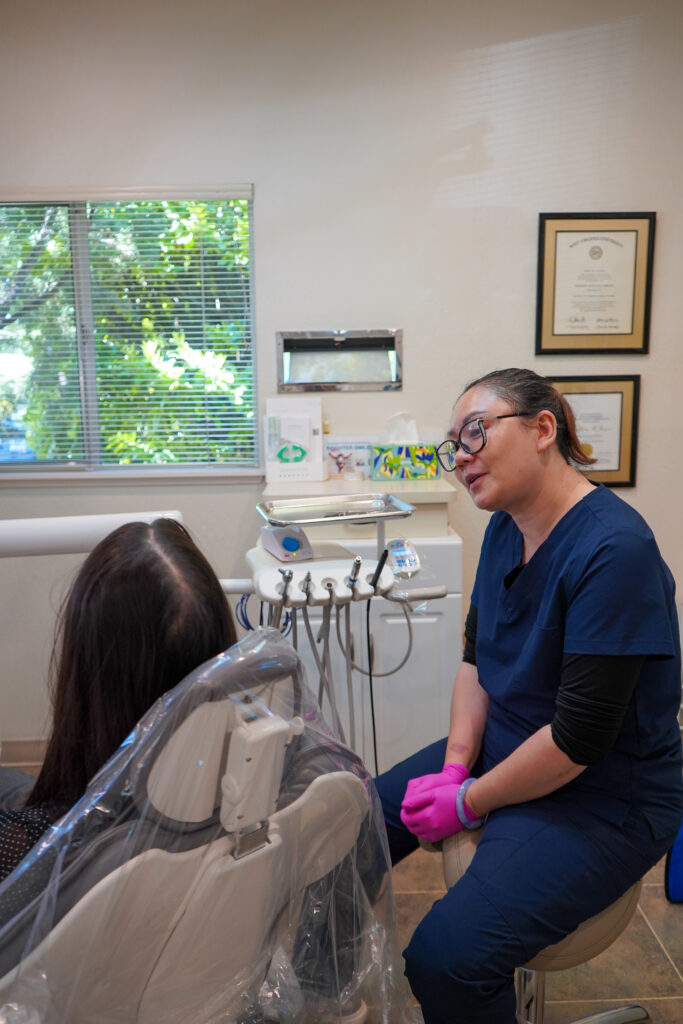
- Come in for routine dental cleanings every six months so we can check the fit and clean areas you can’t reach at home.
That last one matters more than people realize. During your cleaning, our team checks for early signs of decay around the margins, gum recession, or any looseness in the cement. Small problems stay small when we catch them early.
What Shortens a Bridge’s Life
Chewing ice. Biting into hard candy. Using your teeth to open packaging. These habits put stress on the connection points and can crack the porcelain or loosen the fit over time. So can grinding your teeth at night. If you clench or grind, let us know. We offer TMJ/TMD evaluation and can talk about options to protect your bridge while you sleep.
A well-maintained dental bridge can last well over a decade. According to the American Dental Association, proper home care and regular checkups are the biggest factors in long-term success. That lines up with everything we see in our Pleasanton office every week.
You’ve already made the investment. Protecting it takes five extra minutes a day.

Your Questions Answered
Frequently Asked Questions
How long does it take to get a dental bridge in Pleasanton?
Most patients finish the process in just two appointments, usually about two weeks apart. The first visit handles preparation and impressions. The second visit places your permanent bridge. Between appointments, you wear a temporary bridge so your smile stays intact. The whole process moves faster than most people expect. You’re not looking at months of treatment — just a couple of hours total across two visits.
Will getting a dental bridge hurt?
The procedure itself is comfortable because we numb the area before we start. You may feel some soreness or sensitivity for a few days after your first appointment. That’s normal. Over-the-counter pain relief usually handles it fine. Most patients are surprised by how manageable it is. By the time your permanent bridge goes in, most of the sensitivity is already gone.
What happens to my teeth if I wait too long to replace a missing tooth?
Your neighboring teeth will start to drift toward the open space. The tooth above or below the gap can shift up or down too. This creates bite problems that get harder to fix the longer you wait. We see patients in Pleasanton who waited two or three years and ended up needing more work than just a bridge. Acting sooner keeps your treatment simpler and your costs lower.
Can I eat normally with a dental bridge?
Yes — that’s one of the biggest reasons people choose a bridge. Once your permanent bridge is cemented in place, you can chew on both sides again. Patients often say biting into food without thinking about it feels like a relief. During the two weeks you wear your temporary bridge, you’ll want to avoid sticky or hard foods. But after your final placement, normal eating resumes quickly.
Do I need to do anything special to care for my bridge at home?
Daily brushing and flossing are still your best tools. The one difference is how you clean under the bridge. A floss threader or a water flosser helps you reach the area between the bridge and your gum. Food and bacteria can collect there if you skip it. We show every Pleasanton patient exactly how to do this before they leave the office. It takes an extra minute but makes a real difference in how long your bridge lasts.
What if my anchor teeth aren't in great shape — can I still get a bridge in Pleasanton?
It depends on how much work those teeth need. Your anchor teeth must be strong enough to support the bridge. If there’s decay or gum disease, we treat that first. Bone loss from a long-missing tooth doesn’t always rule out a bridge either. We do a full exam and digital X-rays at your first visit to give you a clear, honest answer. Many patients near the Bernal area who assumed they weren’t candidates turned out to be good ones.
Contact Us
Join Our Growing Dental Family
Whether you are looking for a routine cleaning or a full smile makeover, we invite you to experience the difference that compassionate, comprehensive care makes.

Phone

Location
1400 Santa Rita Road, Suite L, Pleasanton, CA 94566