
SERVICES
Annual Check-ups in Pleasanton
Annual Check-ups
New Patient Consultations in Pleasanton
Most people think of dental care as just cleanings and fillings. That’s a small piece of it. The categories of dental care in Pleasanton actually break down into distinct areas, each one solving a different problem for your mouth.
Most people think of dental care as just cleanings and fillings. That’s a small piece of it. The categories of dental care in Pleasanton actually break down into distinct areas, each one solving a different problem for your mouth.
Here’s what your first visit covers:
01
A review of your dental and medical history
02
A full oral exam including an oral cancer screening
03
Digital x-rays to check what we can’t see
04
A one-on-one talk about findings and next steps
We get a lot of new patient consultations from families settling into the Meadows and Birdland neighborhoods. Some haven’t seen a dentist in years; some just need records moved over. Both are fine (really).
This is one of my favorite appointments. It sets the tone. We’re not trying to rush you into treatment, and we’re not guessing. We’re building a plan that fits your life. If you’ve got questions about insurance or billing, our front desk handles that before you leave.
Your new patient consultation sets the direction for everything that follows. We go deeper into what to expect on our dedicated page.
Routine Dental Exams
A routine exam is the backbone of good oral health. Most adults need one every six months. Some need them more often. Skip them long enough, and a tiny cavity can turn into a root canal.
During a routine exam, we check every tooth, your gums, your bite, and your jaw. We look for early signs of decay, gum disease, and anything that seems off. Catching things early keeps treatment simpler and usually keeps costs down too.
We also update your x-rays on a schedule that makes sense for you. Not every visit. Not never. Just when they help.
Patients from the Vintage Hills and Ruby Hill areas often tell us they put off exams for years because life got busy. We hear that a lot. And once they get back in, they usually say the same thing: they wish they hadn’t waited so long.
A routine exam takes about an hour when paired with a cleaning. You leave knowing exactly where things stand. That peace of mind is worth the drive. Learn more about what our exams include on the service page.

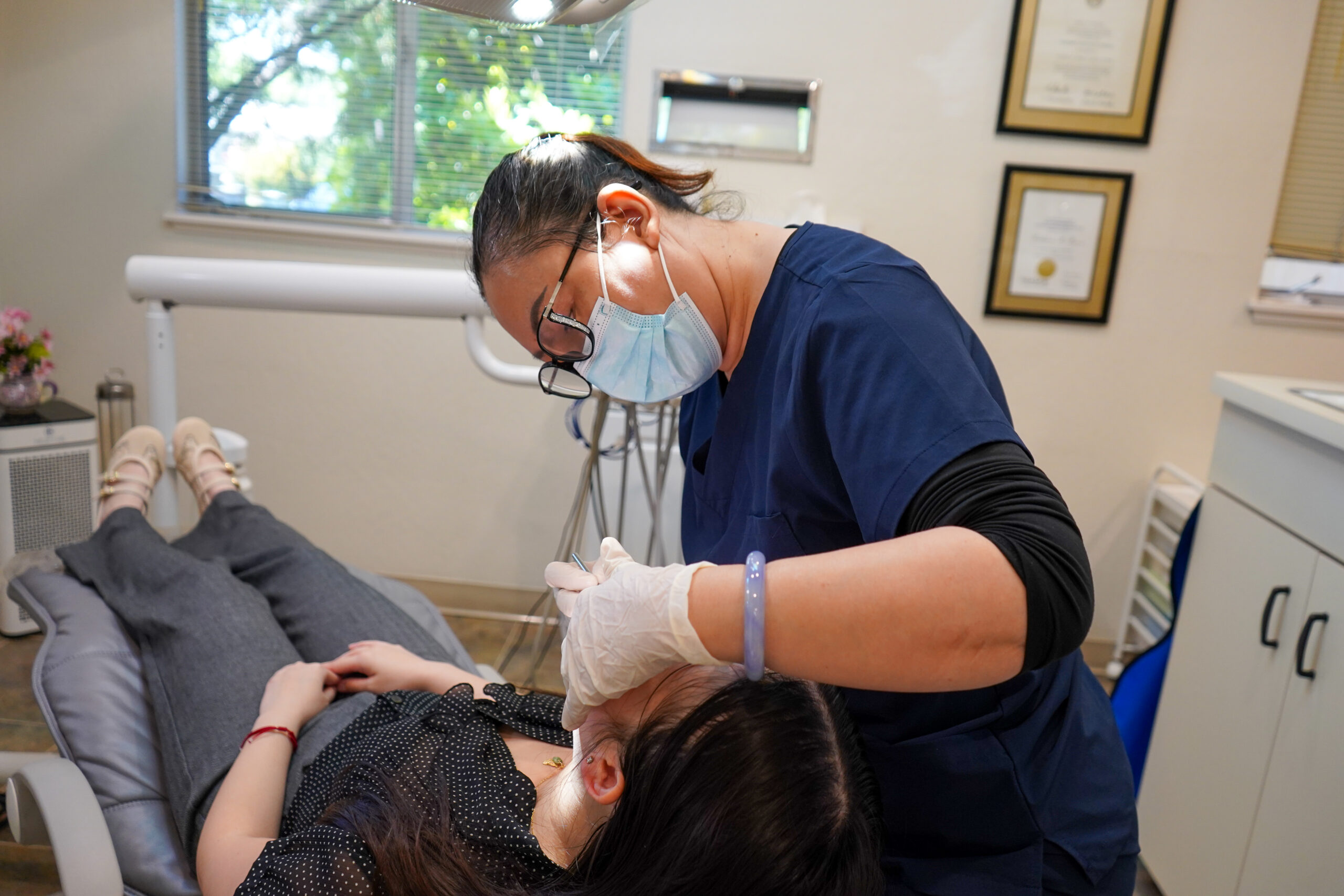
Professional Teeth Cleaning
Brushing and flossing at home matter. They don’t get everything. Tartar builds up in spots your toothbrush misses, and once it hardens, only a professional cleaning gets it off.
Our hygienists are thorough without being rough. They scale away buildup, polish your teeth, and floss the spots that are easy to skip at home. The whole thing usually takes 45 minutes to an hour. Most patients leave feeling like their mouth got a reset
If your gums are sensitive or you haven’t been in for a while, tell us ahead of time. We adjust. No one needs a cleaning that feels like a wrestling match.
We see a lot of patients from the Ironwood and Foothill Knolls neighborhoods who come in for cleanings twice a year like clockwork. That steady habit shows up fast. Their gum health stays calmer, and we rarely get surprised at the exam.
Regular cleanings also lower your risk of gum disease, which is tied to bigger health issues like heart disease and diabetes. That’s not scary talk. It’s just the truth. See the full details on our cleaning page.
Oral Cancer Screenings
Oral cancer screenings take about two minutes. They’re part of your annual exam. And they matter more than most people realize.
We check your lips, tongue, cheeks, throat, and the floor of your mouth. We’re looking for anything unusual: sores that haven’t healed, patches that look off, and lumps that shouldn’t be there. Most of the time, everything looks fine. But when something shows up early, the outcome is much better.
Oral cancer doesn’t always show obvious symptoms at first. That’s why the screening exists. You can feel fine and still have something worth a closer look.

Patients near the Stoneridge and Laguna Oaks areas ask us about this screening after hearing about it from neighbors. Word gets around. Good. The more people who get checked regularly, the better.
If we find anything that concerns us, we don’t leave you guessing. We explain what we saw, what it might mean, and what comes next. No vague answers. Read more about how we handle screenings on the dedicated page.
Gum Disease Evaluation
Gum disease is more common than most people expect. About half of adults have some form of it. The tricky part is that early stages don’t hurt, so it often goes unnoticed until it’s already moved along.
During your annual check-up, we measure the depth of the pockets around each tooth. Healthy gums have shallow pockets. Deeper ones point to inflammation or infection. We also check for bleeding, recession, and bone loss on your x-rays.
If we find early gum disease, we talk through your options. Sometimes it means more frequent cleanings and better home care. More advanced cases may need a deeper cleaning called “scaling and root planing.” We explain it plainly before we do anything.
Families in the Mohr Park and Golden Eagle neighborhoods have been surprised to learn they had gum disease with no pain at all. That’s normal. No pain does not mean no problem.
Gum disease doesn’t have to mean tooth loss. Caught early and managed well, most people keep their teeth for life. Get the full picture on our gum disease evaluation page.

Your Questions Answered
Frequently Asked Questions
How often should I come in for an annual check-up?
Most adults do well with two visits per year. Some people with gum disease or a history of cavities do better coming in every three to four months. We’ll tell you what makes sense for you after your first exam.
What if I haven't been to the dentist in several years?
It happens more than you’d think. We don’t judge. We do a thorough exam, figure out where things stand, and build a plan from there. The first step is getting in the chair.
Do I need x-rays at every visit?
No. We take x-rays based on your risk level and how long it’s been since your last set. For most adults, a full set every three to five years is standard, with smaller checkup x-rays in between.
Is an oral cancer screening painful?
Not at all. It’s a visual and physical check that takes a couple of minutes. We look and feel for anything unusual. Most patients barely notice it.
What's the difference between a cleaning and a deep cleaning?
A regular cleaning removes buildup above and just below the gumline. A deep cleaning, or scaling and root planing, goes further below the gumline to treat gum disease. We only recommend a deep cleaning when the exam shows it’s needed.
What happens during an annual dental check-up?
Your check-up includes a full exam of your teeth, gums, bite, and jaw. We also do an oral cancer screening, update x-rays when needed, and pair the exam with a professional cleaning. You leave knowing exactly where things stand. The whole visit usually takes about an hour.