
SERVICES
Abscess Drainage in Pleasanton
EMERGENCY SERVICES
Signs Your Abscess Is Ready to Be Drained
You’ve been dealing with pain for a couple days now. Maybe longer. Something feels off in your mouth, and you’re wondering if it’s time to come in. We hear this from folks in Pleasanton almost every week.
Not every dental infection needs abscess drainage right away. But certain signs tell you the infection has reached a point where draining it is the right move. Here’s what to watch for:
- A visible bump on your gum that’s swollen, red, or white at the tip
- Throbbing pain that won’t quit, even with over-the-counter meds
- A bad taste in your mouth that comes and goes
- Swelling in your jaw, cheek, or under your chin
- Fever or feeling run down on top of the tooth pain
That bump on the gum is a big one. People near the Bernal neighborhood sometimes call us describing a “pimple” next to a tooth. That’s usually a fistula. The infection is trying to drain on its own. Your body is telling you something.
And here’s the thing most people don’t realize. An abscess can feel better for a day or two if it starts to drain a little on its own. That doesn’t mean it’s healing. The infection is still there, it just found a temporary escape route. The pain comes back worse.
So how do you know the difference between a regular toothache and an abscess? A toothache usually responds to pain relievers and calms down. An abscess keeps building pressure. The pain spreads. You might notice your face looks puffy on one side when you wake up.
According to the American Dental Association, untreated dental infections can spread to other areas of the head and neck. That’s not something to sit on. If you’re running a fever along with mouth pain, that’s your signal to call us right away. We offer same-day emergency appointments for exactly this kind of situation.
Don’t wait for it to get unbearable. If two or three of those signs match what you’re feeling, you’re past the “wait and see” stage.
Urgent Care vs. the ER for Skin Abscess Treatment
You’re staring at a red, swollen lump that’s getting worse by the hour. It hurts to sit, to move, maybe even to sleep. So where do you go?
Most people in Pleasanton assume the emergency room is the only option. It’s not. For a straightforward skin abscess, the ER is usually overkill. You’ll wait longer, pay more, and get the same procedure we do right here in our office. According to the American Academy of Family Physicians, incision and drainage in an outpatient setting is the standard treatment for uncomplicated abscesses. That means urgent care or your dental office handles this just as well for most cases.
But there are times when the ER makes sense. Here’s how to tell the difference:
- You have a fever over 101°F along with the swelling
- Red streaks are spreading away from the abscess site
- The swelling is near your eye, throat, or is making it hard to swallow or breathe
- You have a weakened immune system from medication or a health condition
If none of those apply, you’re likely dealing with something we can treat same-day. We see patients from the Birdland neighborhood and all across town who’ve already spent three hours in an ER waiting room before realizing they had a faster option.
A localized infection needs to be opened, drained, and properly cleaned out. That’s it. No CT scan, no IV antibiotics, no overnight stay. We offer same-day emergency appointments for exactly this reason. You shouldn’t have to suffer while waiting for a spot to open up next week.
There’s also the comfort factor. Sitting in a busy ER with a painful abscess isn’t anyone’s idea of a good time. Our office is smaller, quieter, and you’ll actually talk to the person treating you before anything happens. Want to skip the ER runaround? Give us a call and we’ll get you in today.
The bottom line is simple. If you’re stable and the infection looks contained, come to us first. We’ll tell you if it’s something bigger.
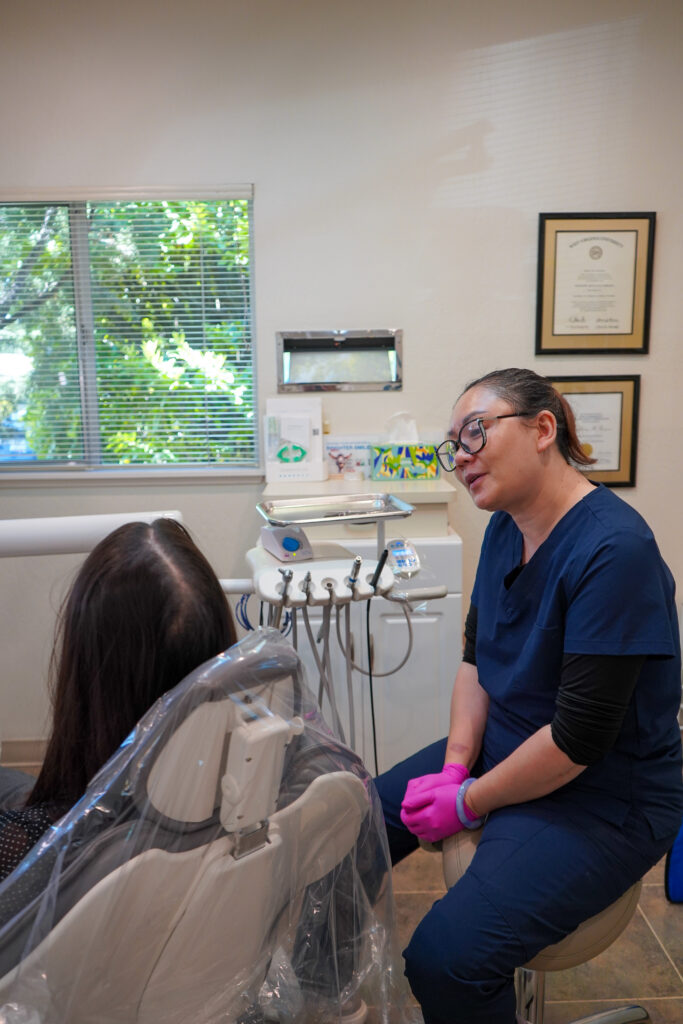

What Happens During Abscess Drainage, Step by Step
Most people who sit down in our chair for abscess drainage are already in rough shape. You’ve probably been dealing with throbbing pain for days. Maybe your face is swollen near the jawline or you can feel a bump on your gums that wasn’t there last week.
Here’s exactly what we do once you’re with us at our Pleasanton office.
- We numb the area completely. Nobody gets started until you’re comfortable. We use a local anesthetic around the abscess site, and for patients who need extra help relaxing, we offer nitrous oxide. You shouldn’t feel sharp pain during the procedure.
- We make a small incision. Once you’re numb, we open the abscess with a precise cut. This lets the trapped infection drain out. That pressure you’ve been feeling? It starts dropping right away.
- We flush the pocket clean. After the initial drainage, we irrigate the area with a sterile solution. This washes out bacteria and debris that could cause the infection to come back. We take our time here, it matters more than people realize.
- We evaluate the source. An abscess doesn’t just appear out of nowhere. We check the tooth, the surrounding bone, and the gum tissue to figure out what caused the infection. Sometimes it’s a cracked filling. Sometimes it’s deep decay that’s reached the nerve. Digital X-rays help us see what’s going on beneath the surface.
- We set up your follow-up plan. Drainage handles the immediate crisis. But the underlying problem still needs treatment, whether that’s an extraction, a crown, or another procedure.
The whole process usually takes less than thirty minutes. Patients tell us the relief is almost instant once that pressure releases.
And here’s something folks near the Bernal neighborhood ask us a lot. “Will I need antibiotics too?” Sometimes yes, sometimes no. It depends on how far the infection has spread. We make that call based on what we see during the procedure, not a one-size-fits-all rule. According to the American Dental Association, abscess drainage combined with treating the source tooth gives the best outcome for clearing oral infections.
You won’t leave our office guessing what comes next. We walk you through aftercare before you stand up from the chair.
Wound Packing and Recovery After Drainage
Here’s the part most people don’t think about before they come in. Draining the abscess is only half the job.
Once we’ve removed the infected material, the cavity left behind can’t just close up on its own right away. If it seals too fast, bacteria get trapped again. Same problem all over. That’s why wound packing matters so much. We place a small strip of medicated gauze inside the opening to keep it draining properly while your body heals from the inside out.
What Packing Actually Does
Think of it like a wick. The packing draws remaining fluid out of the wound and prevents the surface from closing before the deeper tissue has a chance to recover. Most patients in Pleasanton are surprised at how small the packing strip actually is. It’s not painful to have in place, though it can feel a little strange for the first day or two.
We’ll typically ask you to come back so we can check the site and replace the packing if needed. Some cases only need one follow-up. Others need two or three. It depends on how deep the abscess was and how your body responds.
Your Recovery at Home
Recovery is usually straightforward. But you do need to follow a few steps to avoid setbacks:
- Keep the area clean and avoid touching the packing with unwashed hands.
- Take any prescribed antibiotics exactly as directed, even if you feel better fast.
- Stick to soft foods if the drainage site is near your jaw or cheek.
- Watch for new swelling, fever, or increased pain and call us immediately if any of those show up.
Most people near the Bernal or Vintage Hills areas tell us they feel real relief within 24 to 48 hours. The pressure is gone. The throbbing stops. Sleep finally comes easy again.
One thing we tell every patient: don’t skip your follow-up visit. The patients who end up back in our chair with a recurring infection are the ones who felt better and decided they didn’t need to come back. That follow-up lets us confirm the tissue is healing clean and there’s no leftover infection hiding underneath.

Abscess Risk Factors Specific to Active Pleasanton Residents
You’d be surprised how often we see abscess drainage cases that started with something totally preventable.
Pleasanton is an active community. People hike the ridgeline trails, play weekend soccer at the sports park near Hopyard, run with their kids at Val Vista. All that activity is great for your health. But it also means more chances for minor dental injuries that go unnoticed. A cracked tooth from a stray elbow during a pickup basketball game. A chip you don’t feel because adrenaline’s still pumping. These small injuries create openings for bacteria, and bacteria don’t wait around.
We see certain risk factors come up again and again in our patients. Here are the ones that lead to the most abscess cases:
- Old fillings or crowns that have started to break down, letting bacteria sneak underneath
- Skipping routine exams for a year or more, so early decay never gets caught
- Dry mouth from medications or from not hydrating enough during outdoor activity
- Grinding or clenching at night, which creates tiny fractures in tooth enamel
- Sugary sports drinks and energy gels consumed during long runs or bike rides
That last one catches people off guard. Folks who train along Pleasanton Ridge often sip on high-sugar drinks for hours. That constant sugar bath feeds the exact bacteria that cause infection. It’s the same story: someone active, someone healthy, someone who just didn’t realize their teeth were taking a hit.
Stress plays a role too. Your immune system dips when you’re run down, so a small pocket of infection that your body might normally fight off suddenly grows into a full abscess. We’ve seen patients from the Birdland neighborhood come in after a tough few weeks at work, convinced the pain appeared out of nowhere. It didn’t. The conditions were building for months.
The real risk factor is delay. People feel a twinge and assume it’ll pass. But an abscess doesn’t resolve on its own. It only gets bigger, more painful, and harder to treat. If you’re noticing any sensitivity or swelling, that’s your signal.

Your Questions Answered
Frequently Asked Questions
How quickly can I get abscess drainage in Pleasanton without going to the ER?
You can often get same-day treatment at a dental or urgent care office in Pleasanton. Most uncomplicated abscesses don’t need the ER at all. The ER means longer waits and more steps for a procedure that takes under thirty minutes in an outpatient setting. If you don’t have a fever over 101°F, spreading red streaks, or trouble swallowing, call a local office first. You’ll likely get in the same day.
What does it feel like when an abscess starts draining on its own?
You’ll notice a bad taste in your mouth and a brief drop in pressure or pain. That temporary relief tricks a lot of people into thinking the infection is gone. It’s not. The abscess found a short-term escape route, but the bacteria are still there. The pain usually comes back worse within a day or two. If you notice that taste, it’s a sign you need professional drainage soon, not a reason to wait longer.
Is that "pimple" on my gum near a tooth something serious?
Yes, that bump is likely a fistula, and it means your body is trying to drain an active infection on its own. We hear this description from Pleasanton patients near the Bernal neighborhood regularly. It looks small, but it signals a deeper problem at the root or in the surrounding bone. A fistula doesn’t heal without treating the source. Don’t pop it or ignore it. Come in so we can check what’s driving it.
Will I need antibiotics after abscess drainage in Pleasanton?
Not always. Whether you need antibiotics depends on how far the infection has spread at the time of treatment. Some localized abscesses respond fully to drainage and cleaning alone. Others, especially those with swelling spreading into the jaw or signs of systemic infection like fever, need antibiotic support too. Your provider makes that call based on what they actually see during the procedure, not a standard rule applied to everyone.
What should I expect after the drainage procedure is done?
Most patients feel significant pressure relief almost immediately after the abscess is opened and flushed. Some soreness around the site is normal for a day or two. You’ll leave with a follow-up plan because drainage handles the crisis, not the root cause. That might mean a root canal, extraction, or crown depending on what caused the infection. Skipping that next step is the most common reason abscesses come back.
What if the tooth can't be saved after a knock-out?
Sometimes a tooth is too damaged to reimplant, and extraction is the safest choice. We handle it the same day so you’re not left waiting with an unresolved injury. We also talk through replacement options during that same visit. You won’t leave with just a gap and no plan—you’ll know exactly what comes next.
Contact Us
Join Our Growing Dental Family
Whether you are looking for a routine cleaning or a full smile makeover, we invite you to experience the difference that compassionate, comprehensive care makes.

Phone

Location
1400 Santa Rita Road, Suite L, Pleasanton, CA 94566