SERVICES
Pediatric Oral Exams in Pleasanton
What a Pediatric Oral Examination Actually Covers
Most parents assume it’s just a quick peek inside their kid’s mouth. It’s way more than that.
A pediatric oral examination is a full check of your child’s teeth, gums, jaw, bite, and soft tissues. We look at everything from how the tongue moves to whether the roof of the mouth is developing the way it should. Kids grow fast, and their mouths change constantly. That’s exactly why these exams matter so much in Pleasanton, where families bring their little ones in before problems ever start.
Here’s what we’re actually doing during the visit:
- We count and chart every tooth that’s come in, check for any that are missing or arriving early.
- We look at the gums for swelling, color changes, or signs of irritation.
- We check the bite and jaw alignment to catch crowding or crossbite issues early.
- We examine soft tissues like the cheeks, tongue, and lips for anything unusual.
- We evaluate oral habits, things like thumb sucking or mouth breathing that can shift teeth over time.
Most of the time, everything looks great. But that one time we catch something? That’s the whole point. A small cavity hiding between baby molars. A tongue-tie nobody noticed. According to the American Academy of Pediatric Dentistry, children should have their first oral exam by age one. Early visits set the tone for a lifetime of good habits.
We also pay attention to how your child reacts during the exam. Are they nervous? Curious? Clenching their jaw? That tells us a lot about what future visits should look like and whether options like nitrous oxide might help them feel more comfortable down the road.
The pediatric oral examination isn’t just about finding problems, it’s about building a baseline. We track changes visit to visit. Growth patterns. Eruption timing. So when something shifts, we catch it before it becomes a bigger deal.
The Right Age to Start and How Often to Come Back
The American Academy of Pediatric Dentistry recommends a first visit by age one or within six months of the first tooth coming in. That sounds early. But there’s a good reason. An oral exam at this stage isn’t about drilling or fixing anything. It’s about getting a baseline, catching small problems before they grow, and helping your child feel comfortable in the chair from the start.
We see kids who didn’t come in until age four or five. By then, there’s often a cavity that’s been quietly forming for a year or more. Starting early changes that whole story.
What the First Visit Looks Like
For babies and toddlers, the exam is quick. We check gum tissue, look at how teeth are coming in, and talk with you about things like bottle habits and fluoride. The whole thing takes maybe fifteen minutes. Your child sits in your lap most of the time. No stress, no tears.
After that first visit, here’s what we typically recommend for follow-up:
- Schedule a return visit every six months for routine monitoring.
- Bring your child in sooner if you notice discoloration or swelling on the gums.
- Ask about fluoride treatments and dental sealants once molars start appearing.
- Keep up with habit counseling if your child uses a pacifier past age two.
Six-month intervals work for most kids. Some children come in more often because they’re cavity-prone or going through a big growth phase. We adjust based on what we see, not a rigid calendar.
Kids who start regular visits early tend to need fewer fillings later. That pattern holds true almost every time in our office. The consistency matters more than any single appointment.
Not sure if your child is ready? They probably are. Give us a call and we’ll walk you through it.

How the Exam Differs for Infants, School-Age Kids, and Preteens
A one-year-old and a twelve-year-old have almost nothing in common when it comes to their mouths. So we don’t treat them the same way.
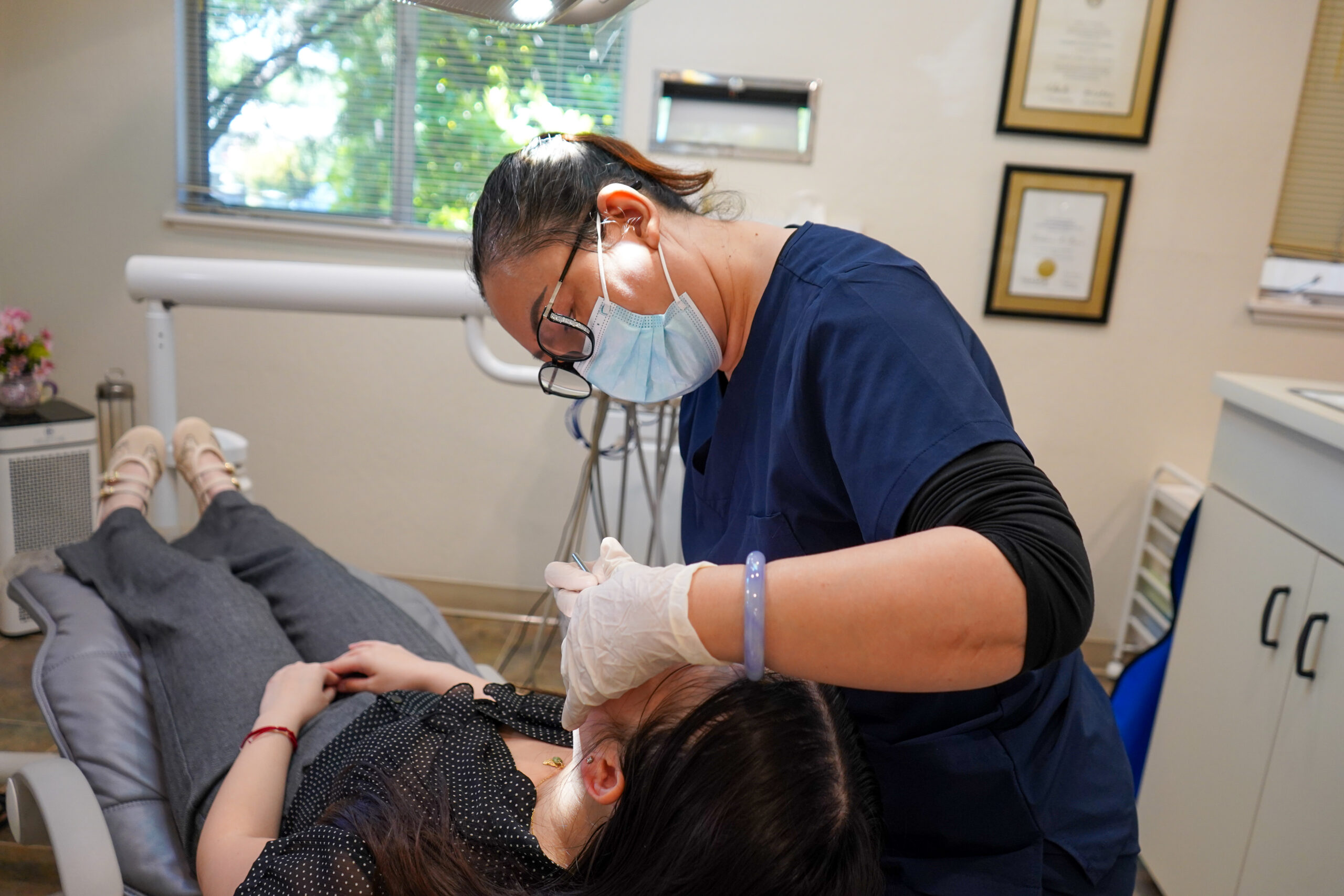
For infants and toddlers, the exam is quick and gentle. We often do a “knee-to-knee” exam where the parent holds the child facing them, then we lean the little one back into our lap. We’re checking gum tissue, looking at how the first teeth are erupting, and spotting early signs of decay from bottle feeding. We also talk with parents about habit counseling for pacifier use and thumb sucking before those habits affect jaw development. Most Pleasanton families bring their babies in right around that first birthday, which lines up with what pediatric dentistry guidelines recommend.
School-Age Kids: Ages 5 Through 10
This is where things get interesting. Baby teeth are falling out, permanent teeth are pushing through, and spacing can look wild. Parents worry something’s wrong when a front tooth comes in crooked or a gap won’t close. It’s totally normal.
During this stage we’re watching for:
- Crowding or alignment issues as adult teeth arrive
- Cavities in molars that still have years left before they fall out
- Soft tissue problems from sports or playground bumps
- Enamel defects on new permanent teeth
We also talk about dental sealants at this age. Those back molars are full of deep grooves that trap food, sealants make a real difference.
Preteens: Getting Ahead of Bigger Problems
By age 11 or 12 most permanent teeth are in. The exam shifts focus. We’re evaluating the full bite, checking for early signs of TMJ issues, and looking at wisdom tooth development through digital x-rays. Kids in braces or retainers need extra attention around brackets where plaque hides. And preteens in Pleasanton are active. Soccer, volleyball, martial arts. We talk about mouthguards and what to do if a tooth gets knocked out.
Every age group gets our full attention. But the exam itself looks different each time because your child’s mouth is always changing.
Preparing Your Child for a Stress-Free Dental Visit
Most of the anxiety kids feel about the dentist starts at home. Not because parents do anything wrong. It’s just that little ones pick up on energy fast.
Here’s what we tell Pleasanton families before their child’s first pediatric oral examination. Keep it simple. Don’t over-explain what’s going to happen, don’t use words like “hurt” or “shot” or “drill.” We’ve seen kids walk in totally relaxed until a well-meaning parent says “don’t worry, it won’t hurt.” Suddenly they’re worried about something they hadn’t even considered. Talk about it the way you’d talk about a trip to the library. Matter of fact, no big deal.
What to Do the Night Before
A little prep goes a long way. Here’s what works best for the families we see across Pleasanton:
- Read a short children’s book about visiting the dentist. Something with pictures and a happy ending.
- Let your child pick a comfort item to bring along, a stuffed animal or a favorite blanket.
- Practice opening wide at home. Make it a game. Count their teeth together with a clean finger.
- Get a good night’s sleep and eat a light meal before the appointment.
- Arrive about ten minutes early so they can get comfortable in the waiting area.
That last one matters more than people think. Rushing in at the last second puts everyone on edge.
We also recommend scheduling morning appointments for younger children. Kids under five tend to be more cooperative before they’re tired and hungry. And if your child has a favorite song or show on a phone, bring headphones. Sometimes a quick distraction during the wait is all it takes.
One thing we notice often is a parent who’s more nervous than the child. That’s okay. Our team works with anxious families all the time, we’re used to it. If your child does get upset, we slow down. We stop. We let them reset. There’s no rushing through a visit just to check a box. The goal is building trust so the next visit feels even easier. If you want to chat about your child’s specific needs before booking, give us a call.
What Happens After the Exam, and When to Act Quickly
Most kids walk out of our office with a clean bill of health and a new toothbrush. That’s the best outcome, and it’s what we see most of the time.
But sometimes we find something that needs attention.
Common Next Steps We Recommend
Depending on what we see during the exam, we might suggest one or more of these:
- A fluoride treatment to strengthen enamel on teeth that look vulnerable
- Dental sealants on back molars to block decay before it starts
- A follow-up for a BPA-free composite filling if we spot a small cavity
- Habit counseling if thumb sucking or pacifier use is affecting tooth alignment
Most of the time, early findings are minor. A soft spot on a baby tooth. A bite that’s slightly off. These aren’t emergencies, they’re things we monitor over time.
When You Shouldn’t Wait
Some situations do need faster action. If your child has a tooth that’s darkening in color, swelling along the gumline, or pain that won’t quit, those are signs something’s already progressing. We keep same-day emergency appointments available for families across Pleasanton for exactly this reason.
We’ll always give you a clear timeline. Some things can wait six months until the next visit, some things we want to see in a few weeks. You’ll know which is which before you leave the chair.

Your Questions Answered
Frequently Asked Questions
When should my child have their very first oral exam in Pleasanton?
Your child should have their first oral exam by age one, or within six months of their first tooth coming in. That sounds early, but it gives us a baseline before problems start. We check gum tissue, look at how teeth are erupting, and talk with you about bottle habits and fluoride. Kids who start this early in Pleasanton tend to need fewer fillings down the road. It’s a short, gentle visit — your baby sits in your lap the whole time.
How do I know if my child's crooked teeth or big gaps are actually a problem?
Most of the time, crooked teeth and wide gaps during the school-age years are completely normal. When baby teeth fall out and permanent teeth push through, spacing can look wild for a while. During the exam, we watch for crowding that won’t self-correct, alignment issues affecting the bite, and enamel defects on new permanent teeth. We track changes visit to visit so we can tell the difference between normal growth and something that needs attention early.
My child is nervous about dental visits — what can we do to make the exam easier?
Nervous kids are totally normal, and we watch for that during every exam. We pay attention to how your child reacts — are they clenching their jaw, pulling back, or just curious? That tells us a lot. For younger kids, the knee-to-knee exam position keeps them close to you and feels less scary. For kids who stay anxious visit after visit, we can talk about options like nitrous oxide to help them feel more comfortable. Starting visits early in Pleasanton helps the most — familiarity builds confidence over time.
How often does my child actually need to come in for an oral exam?
Most kids do well with a visit every six months. That schedule works for routine monitoring and catching small problems before they grow. Some children come in more often — especially if they’re cavity-prone or going through a fast growth phase. We adjust based on what we see at each visit, not a fixed calendar. If you notice gum swelling or discoloration between appointments, bring your child in sooner rather than waiting for the next scheduled visit.
Do active kids in Pleasanton need anything extra at their oral exam?
Yes — and it comes up a lot with families here. Kids playing soccer, volleyball, or martial arts face a real risk of tooth injuries. During the exam, we check for soft tissue damage from sports or playground bumps and look at whether a custom mouthguard makes sense. We also talk through what to do if a tooth gets knocked out, because acting fast in those first minutes makes a big difference. If your child is in braces, we pay extra attention to plaque buildup around brackets during the exam too.
What happens at an oral exam for a preteen compared to a younger child?
By age 11 or 12, the exam shifts focus significantly. Most permanent teeth are in, so we evaluate the full bite, check for early signs of TMJ issues, and look at wisdom tooth development through digital x-rays. It’s a more detailed review than what we do for toddlers or early school-age kids. Preteens also need habit counseling around things like mouth breathing that can still affect jaw development at this stage. The exam looks different every few years because your child’s mouth keeps changing.
Contact Us
Join Our Growing Dental Family
Whether you are looking for a routine cleaning or a full smile makeover, we invite you to experience the difference that compassionate, comprehensive care makes.

Phone

Location
1400 Santa Rita Road, Suite L, Pleasanton, CA 94566