
SERVICES
Scaling and Root Planing in Pleasanton
Scaling and Root Planing Is Not the Same as a Regular Cleaning
A regular dental cleaning handles the stuff above your gumline. It’s routine. It’s preventive. But scaling and root planing goes below the gums, into the pockets where bacteria hide and do real damage.
Think of it this way.
A professional prophylaxis removes plaque and tartar from tooth surfaces you can see. It’s what you get at your six-month checkup. Scaling and root planing targets the buildup you can’t see, the hardened deposits clinging to root surfaces deep under your gum tissue. Two completely different procedures with different goals.
Here’s what makes scaling and root planing a separate treatment:
- It reaches 4mm or deeper below the gumline into periodontal pockets
- It smooths rough spots on tooth roots where bacteria collect
- It’s done with local anesthetic so you stay comfortable
- It often takes two visits, treating one side of the mouth at a time
- It’s a therapeutic procedure, not a preventive one
We see patients in Pleasanton who’ve been told they need a “deep cleaning” and assume it’s just a more thorough version of their regular visit. It’s not. According to the American Dental Association, this procedure is the standard non-surgical treatment for periodontal disease. That’s a medical intervention, not maintenance.
We measure pocket depths around every tooth. Healthy gums sit at 1 to 3 millimeters. Once those numbers hit 4 or above, a regular cleaning won’t cut it. The instruments used are different. The time involved is longer. And the healing process afterward matters a lot more.
So if someone told you that you need this treatment, don’t brush it off as upselling. The bone loss that comes from untreated gum disease doesn’t reverse itself, it only gets managed. Catching it now in the early stages is the whole point. Patients near downtown Pleasanton and over in Birdland know our office takes time to explain the difference before we ever pick up an instrument.
Signs That Gum Disease Has Gone Below the Gumline
Most people don’t realize anything’s wrong until they’re sitting in our chair. That’s the tricky part about gum disease. It doesn’t always hurt.
But your mouth does give you clues. You just have to know what to look for. We see patients come in for a routine exam and find out the infection has already spread beneath the gumline. By that point, a regular cleaning won’t cut it. Going deeper is what’s needed to actually reach the problem.
So what should you watch for? These are the signs we hear about most often:
- Gums that bleed when you brush or floss, even gently
- Redness or swelling along the gumline that doesn’t go away
- Persistent bad breath no amount of mouthwash fixes
- Teeth that feel loose or seem to have shifted position
- Gums pulling back from your teeth, making them look longer
Here’s one we hear a lot in our Pleasanton office. A patient notices their front teeth look “longer” than they used to. They assume it’s just aging. It’s gum recession caused by bacteria that’s been building up below the surface for months.
Another common scenario. You bite into something cold and get a sharp zing near the root of a tooth. That sensitivity often means the gum tissue has pulled away enough to expose areas that should be protected.
What Happens If You Wait
Ignoring these signs doesn’t make them go away, it makes them worse. According to the CDC, nearly half of adults over 30 have some form of periodontal disease. The longer bacteria sit in those deep pockets around your teeth, the more bone and tissue you lose. And once bone is gone, you can’t grow it back on your own.
Not sure if what you’re experiencing is serious? That’s actually pretty common. We can measure your gum pockets during a routine exam and tell you exactly where things stand. Early detection changes everything.
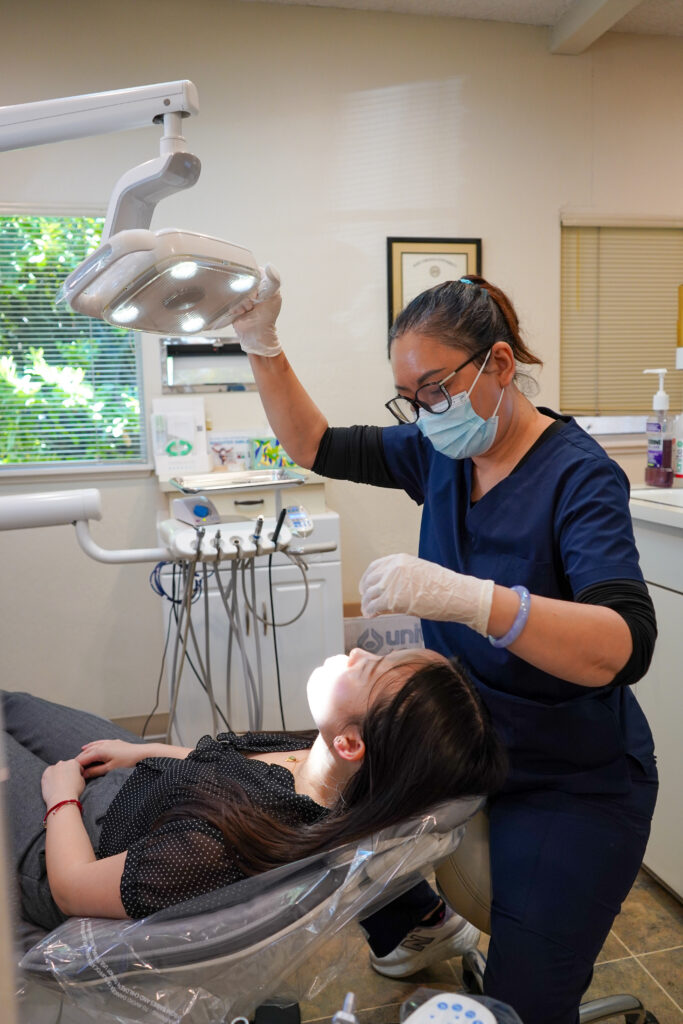

Your Scaling and Root Planing Appointments, Step by Step
Most people feel nervous because they don’t know what’s coming. So let’s walk through exactly what happens when you sit down in our chair here in Pleasanton.
We usually split the procedure into two visits, one side of your mouth per appointment. That way you’re not numb everywhere at once, and you can eat normally on the other side afterward. Each visit runs about 60 to 90 minutes depending on how much buildup we’re dealing with.
Here’s what the process looks like:
- We numb the area. You’ll get local anesthetic so you won’t feel a thing below the gumline. If you’re anxious, we also offer nitrous oxide to help you relax.
- We scale below the gums. Using ultrasonic instruments and hand tools, we clear out tartar and bacteria that have collected in those deep pockets around your teeth.
- We smooth the root surfaces. This is the “root planing” part. Rough roots give bacteria a place to grab hold again, so we plane them down until they’re smooth.
- We irrigate the pockets. A rinse flushes out loosened debris and helps reduce bacteria counts right away.
- We check your bite and comfort. Before you leave, we make sure everything feels right and go over your home care instructions.
Patients tell us it was way easier than they expected. The numbness wears off in a couple hours. Some soreness for a day or two is normal, nothing that over-the-counter pain relief can’t handle.
About a week after your second appointment, your gums already start tightening back up around the teeth. Patients near the Pleasanton Gateway area come back and say their gums feel firmer, the bleeding has stopped. That’s the healing kicking in.
We’ll schedule a follow-up around four to six weeks later. At that visit we re-measure your pocket depths to see how much they’ve improved. That measurement tells us whether you’re ready for periodontal maintenance or if any spots need a little more attention.
Want to know what happens before we even pick up an instrument? Give us a call and we’ll start with a full exam so there are no surprises.
What Is Normal After Scaling and Root Planing
Your mouth is going to feel different for a few days. That’s not a problem, that’s healing. Expect some tenderness. Your gums just went through a deep cleaning below the gumline, so mild soreness is completely normal. Most people describe it as a dull ache that fades within 48 to 72 hours. Some sensitivity to hot and cold drinks is common too, especially around the teeth we worked on near the roots.
What You’ll Likely Notice
Here’s what patients typically experience in the first week after treatment:
- Slight bleeding when brushing or flossing for the first two to three days
- Gum tenderness that feels like a bruise, not sharp pain
- Teeth feeling “longer” because swollen gum tissue is finally shrinking back
- Sensitivity when eating cold foods or drinking ice water
- Minor jaw stiffness from keeping your mouth open during the procedure
Patients call worried about something that’s actually a sign things are going exactly right. Gums that were puffy and dark red start turning pink again. That’s progress.
But here’s what isn’t normal. Heavy bleeding that won’t stop after applying gentle pressure for 20 minutes. Severe pain that over-the-counter medication can’t touch. Swelling that gets worse after day three instead of better. If any of that happens, call us right away.
We usually recommend sticking to softer foods for the first couple days. Think scrambled eggs, yogurt, pasta. Nothing crunchy or sharp that could irritate the gum tissue while it’s recovering. Warm salt water rinses help a lot, just a half teaspoon in eight ounces of warm water, gently swished a few times a day.
Most of our patients near the Pleasanton Gateway area are back to eating normally within a week. The sensitivity fades as your gums tighten back around the tooth roots. A lot of people tell us their mouth feels better than it has in years once everything settles down.
Your follow-up visit matters. We’ll check how your gums responded and make sure the pockets are shrinking the way we want them to.
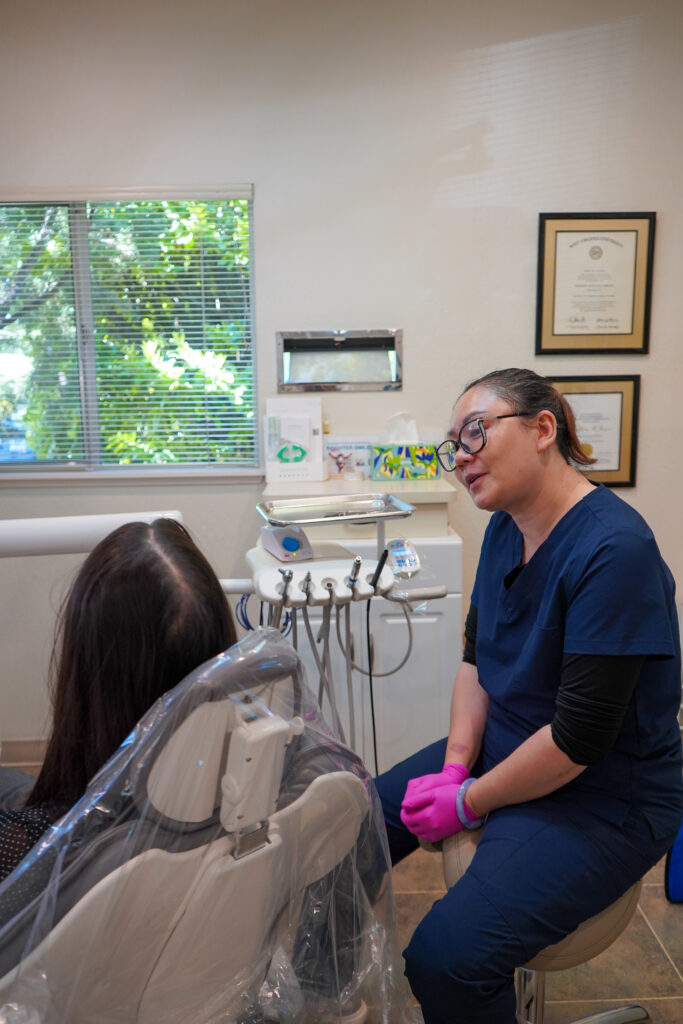
Long-Term Gum Health After Your Deep Cleaning in Pleasanton
Getting this procedure done is a big step. But it’s not the finish line.
Your gums need ongoing care to stay healthy after a deep cleaning. What you do at home matters just as much as what we do in the chair. Maybe more. The bacteria that caused your gum disease didn’t show up overnight, they built up over time. Without a plan, they’ll come right back.
What Happens in the Weeks After Treatment
Most patients notice their gums feel tighter within two to three weeks. Bleeding during brushing usually drops off and that puffiness along the gumline starts to go away. We schedule a follow-up visit about four to six weeks after your procedure to measure your pocket depths again, and we see real improvement at that check.
But here’s the thing. Your gums are still healing for months after that. The tissue is reattaching to your tooth roots. Rushing back to old habits can undo everything.
Keeping Your Results Long-Term
We recommend periodontal maintenance visits every three to four months instead of the standard six-month cleaning schedule. These aren’t regular cleanings. They’re targeted visits where we check pocket depths, clean below the gumline, and catch any trouble spots early. Patients in the Birdland neighborhood and across Pleasanton who stick with this schedule keep their results far longer than those who skip visits.
Your daily routine matters too. Here’s what we ask you to commit to:
- Brush twice a day with a soft-bristled brush, angling toward the gumline
- Floss every night, not just when you remember
- Use an antimicrobial rinse if we recommend one
- Quit tobacco products, which slow healing and feed bacteria
We see patients who had serious gum disease five years ago walking in today with stable, healthy tissue. That doesn’t happen by accident. It happens because they followed through.
Think of your deep cleaning as a reset. You got a fresh start. Now it’s about protecting it. Our team is here to help you do exactly that, visit after visit, year after year.

Your Questions Answered
Frequently Asked Questions
Is scaling and root planing painful?
Most patients in Pleasanton are surprised by how comfortable the procedure actually is. You get local anesthetic before we start, so you won’t feel anything below the gumline during treatment. Afterward, some soreness for a day or two is normal. Over-the-counter pain relief handles it well for most people. If you’re anxious about dental work, we can also offer nitrous oxide to help you relax during the appointment.
How is this different from the regular cleaning I get every six months?
A regular cleaning works above the gumline and is preventive. Scaling and root planing goes below the gums, into pockets that are 4mm or deeper, where bacteria are actively causing damage. It also includes smoothing the root surfaces so bacteria can’t grab hold again. These are two completely different procedures with different goals. Your dentist won’t recommend this unless your pocket measurements actually call for it.
How many appointments will I need, and how long does each one take?
Most patients need two appointments — one for each side of your mouth. Splitting it up means you’re not numb everywhere at once and can eat normally on the other side. Each visit runs about 60 to 90 minutes depending on how much buildup is present. After your second appointment, we schedule a follow-up around four to six weeks later to re-measure your pocket depths and check how well your gums have healed.
My gums bleed when I brush — does that mean I definitely need this treatment?
Bleeding gums are one of the most common signs that something is going on below the gumline, but only a pocket depth measurement can confirm whether scaling and root planing is needed. Healthy gums measure 1 to 3 millimeters. Once those numbers hit 4 or above, a regular cleaning won’t reach the problem. We check those measurements during a routine exam right here in Pleasanton, so you’ll know exactly where things stand.
What should I expect during recovery after my appointments?
Recovery is usually mild. Expect some tenderness and sensitivity for a day or two after each visit — most people manage it fine with over-the-counter pain relief. Your gums may look slightly swollen right after, but patients near the Pleasanton Gateway area often notice their gums feeling firmer and the bleeding stopping within about a week. Stick to softer foods for the first day, and follow the home care instructions we give you before you leave.
Will I need this treatment again, or is it a one-time procedure?
Scaling and root planing treats active gum disease, but it doesn’t cure the underlying tendency toward it. After your gums heal, most patients move to a periodontal maintenance schedule — typically every three to four months instead of the standard six. That more frequent schedule keeps bacteria from rebuilding in those pockets. Whether you need the deep cleaning repeated depends on how well your gums respond and how consistent you are with home care and follow-up visits here in Pleasanton.
Contact Us
Join Our Growing Dental Family
Whether you are looking for a routine cleaning or a full smile makeover, we invite you to experience the difference that compassionate, comprehensive care makes.

Phone

Location
1400 Santa Rita Road, Suite L, Pleasanton, CA 94566