
SERVICES
Treatment For Toothaches in Pleasanton
EMERGENCY SERVICES
Why Your Tooth Hurts and What It Means
That sharp sting when you bite down on something cold. The dull throb that won’t quit at 2 a.m. These aren’t random, they’re signals. Your tooth is telling you something specific, and treatment for toothaches starts with figuring out exactly what that signal means.
Not all tooth pain works the same way. A quick zap when you sip iced coffee points to one problem. A deep, constant ache that radiates into your jaw points to something else entirely. We see patients in Pleasanton who’ve been living with pain for days because they weren’t sure if it was “bad enough” to come in. It’s bad enough.
Here are the most common reasons your tooth hurts:
- Decay reaching the nerve. A cavity that’s gone deep enough will start firing pain signals you can’t ignore.
- A cracked or fractured tooth. Sometimes you can’t even see the crack, but you feel it every time you chew.
- Infection or abscess. This one comes with swelling, pressure, and sometimes a bad taste in your mouth.
- Gum disease irritating the root. When gums pull back, the sensitive root surface gets exposed.
- A lost filling or crown. That gap leaves the tooth wide open to temperature and bacteria.
The pain doesn’t just go away on its own. It might ease up for a day or two, that’s your body managing inflammation temporarily. But the cause is still there, getting worse.
So what does the type of pain actually tell us? Sharp and sudden usually means the nerve is being triggered directly. Throbbing that keeps you up at night often means infection is building pressure inside the tooth. Pain when you bite down can mean a crack or a failing restoration. Each pattern gives our team a head start before we even take digital X-rays.
Patients near the Bernal and Vintage Hills neighborhoods sometimes tell us they thought the pain was just sensitivity. There’s a real difference. Sensitivity fades fast; a toothache lingers and gets louder. If yours has been hanging around more than a day or two, that’s your answer.
Signs Your Toothache Needs Same-Day Care
Some toothaches are mild. They come and go. You notice them when you drink cold water, then forget about them. That’s not what we’re talking about here.
We’re talking about the kind of pain that stops you mid-sentence. The kind that wakes you up at 2 a.m. and won’t let you fall back asleep. If that sounds familiar, you probably need treatment for toothaches today, not next week. Our Pleasanton office keeps same-day emergency appointments open for exactly this reason.
So how do you know it’s urgent? Look for these red flags:
- Pain that throbs on its own without biting or chewing
- Swelling in your jaw, cheek, or around the gum line
- A bad taste in your mouth that won’t go away
- Fever or feeling generally unwell alongside tooth pain
- Pain that shoots up toward your ear or down your neck
Any one of those signs means something is actively wrong. Two or more together? That’s your body telling you infection may be spreading. According to the American Dental Association, untreated dental infections can become serious health emergencies in a matter of days.
Here’s what we see regularly. Someone near the Bernal or Vintage Hills area calls and says the pain started small a few days ago. They tried ibuprofen. They tried ice packs. Now their face is puffy and the pain is constant. By the time they reach us, what could have been a simple fix has turned into something bigger.
Not sure if your situation counts as an emergency? That’s pretty common. People second-guess themselves because the pain fades for an hour and they think it’s getting better. It’s usually not. The nerve is just exhausted.
Don’t wait for it to “get really bad.” If you’re already thinking about calling a dentist, that’s your answer. Trust that instinct. A quick emergency examination can tell us exactly what’s going on and whether you need same-day treatment or can safely wait a day or two.


What Happens at Your Toothache Appointment
You’re already in pain, so the last thing you need is confusion about what’s going to happen next. Here’s exactly how we handle treatment for toothaches once you walk through our door in Pleasanton.
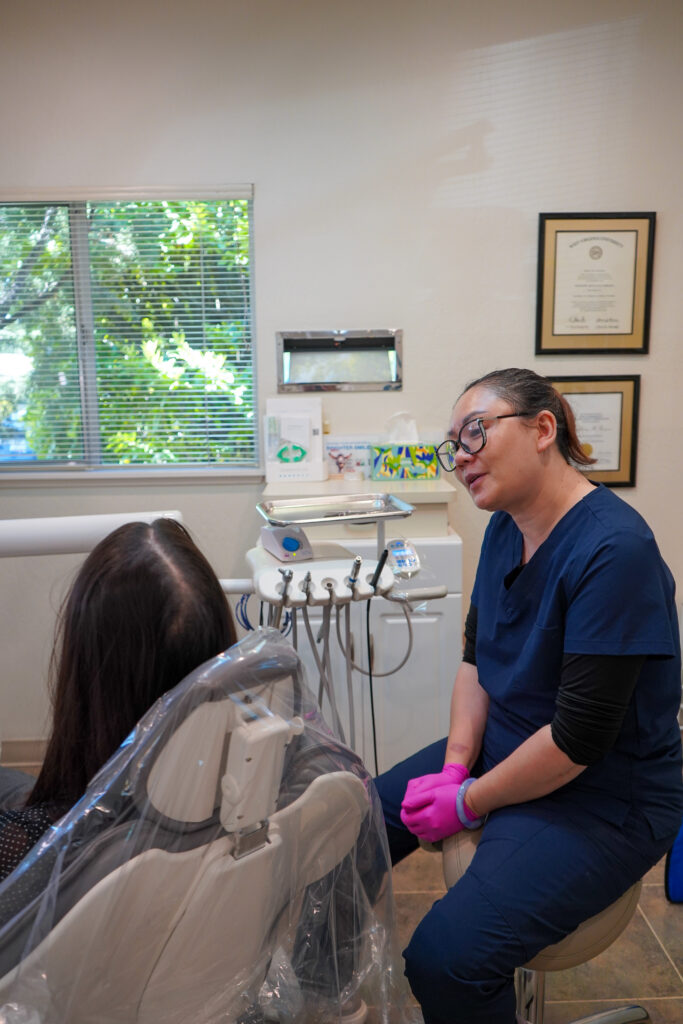
First, we listen. You tell us where it hurts, when it started, what makes it worse. That conversation alone tells us a lot. The pattern of your pain points us right to the problem before we even pick up an instrument.
After that, the process moves fast:
- We do a focused exam of the tooth and the tissue around it, checking for swelling, cracks, or obvious decay.
- We take digital X-rays to see what’s happening below the surface, infections, bone loss, hidden fractures that you can’t spot just by looking.
- We test the tooth’s response to cold and pressure, which helps us figure out if the nerve is still healthy or already damaged.
- We talk you through what we found and lay out your options right there in the chair.
Most patients near the Bernal area tell us they expected something scarier. It’s really not.
If the fix is straightforward, like a cavity that needs a BPA-free composite filling, we can often handle it the same visit. No second appointment. No waiting around in pain for another week. But if we find something bigger, say an infection that’s spread or a crack running deep into the root, we’ll explain the next steps clearly. We don’t rush you into decisions.
We also check whether your bite might be part of the problem. Sometimes a tooth hurts not because it’s decayed but because it’s taking too much force when you chew. A lot of offices skip that step. We don’t.
And if you’re nervous? We offer nitrous oxide to take the edge off. You stay awake, you stay in control, you just stop gripping the armrest so hard.
The whole point is simple. You came in hurting. You should leave with answers and a clear plan.
Treatment Options Based on What the Dentist Finds
Once we’ve pinpointed the cause, we talk you through what comes next. No guessing. No jumping ahead. The treatment depends entirely on what’s actually going on inside your tooth.
A small cavity caught early? That’s usually a BPA-free composite filling. We remove the decay, place the filling, and you’re out the door feeling better. Most folks in Pleasanton are surprised how quick it is. But a deeper cavity that’s reached the nerve needs more work, sometimes a pulpotomy or pulpectomy to clear out infected tissue and save the tooth. Understanding the full range of toothache causes and treatments can help you feel more prepared before your appointment.
Common Treatments We Recommend
Here’s what treatment for toothaches typically looks like depending on what we find:
- BPA-free composite fillings for cavities that haven’t spread deep into the tooth structure
- Dental crowns when a tooth is cracked, weakened, or has too much decay for a filling alone
- Scaling and root planing if gum disease is the real source of your pain
- Emergency tooth extraction for teeth that are too damaged to save
- Abscess drainage when infection has built up pressure below the gumline
Many of these we can handle the same day you come in. That matters when you’re hurting.
Sometimes the best move is a temporary restoration. We stabilize the tooth, get you comfortable, then bring you back for the permanent fix. Patients near the Bernal neighborhood appreciate knowing they won’t sit in pain while waiting for a follow-up.
And here’s something people don’t always realize. A toothache in your upper jaw can actually be referred pain from your TMJ. If that’s what’s happening, we’ll shift toward a TMJ/TMD evaluation instead of drilling into a perfectly healthy tooth.
Every treatment starts with a conversation. We explain what we found, what your options are, and what happens if you wait. You decide. No pressure, just honest answers so you can move forward feeling sure about your choice.
Preventing the Next Toothache Before It Starts
You got through the hard part. The pain’s gone. Now let’s keep it that way.
Most toothaches we treat in Pleasanton are preventable. That’s not a guess. We see the same patterns repeat, the same spots break down, the same habits cause trouble year after year. The fix is usually boring. It’s just consistency.
What Actually Prevents Toothaches
Here’s what works for our patients who rarely end up back in the chair for pain:
- Routine exams every six months so we catch small problems before they turn into emergencies
- Dental cleanings to remove tartar buildup you can’t get with a toothbrush alone
- Fluoride treatments that strengthen enamel, especially for patients with a history of cavities
- Dental sealants on back teeth where food loves to hide
- Digital X-rays once a year to spot decay between teeth that’s invisible to the naked eye
None of that is fancy. But it works. The patients who skip their six-month visits are the ones calling us with emergencies down the road.
Brushing twice a day matters. Flossing matters more than most people think. We spend time on oral hygiene instructions during visits because small technique changes can make a real difference. You’d be surprised how many adults have been brushing the same wrong way since childhood.
If you live near the Bernal or Vintage Hills area, you’re close enough that there’s no excuse to skip your check-up. We make it easy to stay on schedule.
Got kids? Pediatric dental cleanings and pediatric oral examinations catch problems early when baby teeth are still guiding permanent ones into place. Starting young builds habits that prevent toothaches for life.
And if you’ve had scaling and root planing done, periodontal maintenance visits keep gum disease from creeping back. Skipping those follow-ups is like fixing a leak and never checking the roof again.
Prevention isn’t exciting, it’s just the one thing that actually keeps you out of pain. Our team in Pleasanton would rather see you for a routine visit than an emergency. So would you.

Your Questions Answered
Frequently Asked Questions
How do I know if my toothache is serious enough to call a Pleasanton dentist today?
If your pain throbs on its own, wakes you up at night, or comes with swelling, you should call today. Those signs mean something active is happening inside the tooth. A pain that fades for an hour and comes back is not improving — the nerve is just tired. Pleasanton residents near Vintage Hills often wait too long hoping it will pass. It usually doesn’t. Trust your instinct. If you’re already wondering whether to call, that’s your answer.
What should I do to prepare for a same-day toothache appointment?
You don’t need to do much before coming in. Bring your dental insurance card if you have one, and be ready to describe when the pain started and what makes it worse. That information helps us move fast. If you’ve been taking ibuprofen, let us know the dose and timing. Parking at our Pleasanton office is straightforward, so don’t stress about logistics. Just get here — the sooner you arrive, the sooner you leave with a clear plan.
Can a toothache go away on its own without treatment?
The pain might quiet down for a day or two, but the cause does not go away on its own. Your body manages inflammation temporarily, which tricks a lot of people into thinking they’re improving. The underlying problem — decay, a crack, or an infection — keeps getting worse underneath. We see this regularly in Pleasanton. What starts as a fixable cavity can turn into something that needs a root canal simply because it was left alone too long. A short wait becomes a bigger procedure.
What does it mean when my toothache pain shoots toward my ear or jaw?
Pain that radiates toward your ear, jaw, or neck usually means the nerve is heavily involved or an infection is building pressure. This is one of the red flags we take seriously. It doesn’t always mean the worst-case scenario, but it does mean you need an exam that day. Digital X-rays help us see if there’s an abscess or bone loss driving that spreading pain. Patients in the Bernal area who describe this symptom often have an infection that needs prompt treatment to keep it from spreading further.
Will you be able to treat my toothache the same day, or do I need a follow-up appointment?
In many cases, yes — we can treat the problem the same visit. If the cause is a cavity that’s reached the nerve or a lost filling, we can often complete the fix right there. We keep same-day emergency slots open in our Pleasanton office for exactly this reason. If we find something more involved, like a deep crack or a spreading infection, we’ll explain the full plan clearly before anything happens. You won’t leave confused about what comes next.
What if the tooth can't be saved after a knock-out?
Sometimes a tooth is too damaged to reimplant, and extraction is the safest choice. We handle it the same day so you’re not left waiting with an unresolved injury. We also talk through replacement options during that same visit. You won’t leave with just a gap and no plan—you’ll know exactly what comes next.
Contact Us
Join Our Growing Dental Family
Whether you are looking for a routine cleaning or a full smile makeover, we invite you to experience the difference that compassionate, comprehensive care makes.

Phone

Location
1400 Santa Rita Road, Suite L, Pleasanton, CA 94566